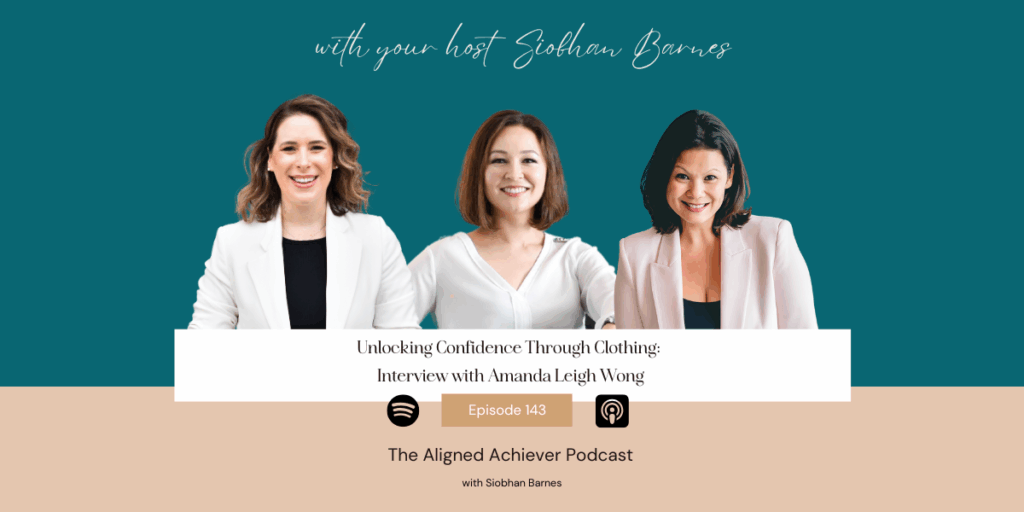
Today, we’re diving into the meaning and movement behind Watch Her Lead, and what it truly takes to create transformational change as women leaders in Asia.
In countless conversations with women at different stages of their careers, I’ve realised that style isn’t a superficial extra or something “nice to have when there’s time.” It’s a practical, embodied way of honouring who we are, how we want to feel, and how we choose to show up in rooms that weren’t always designed with us in mind.
In this episode, I’m joined by my Watch Her Lead co-CEO Elaine Champion and Watch Her Lead Academy guest expert Amanda Leigh Wong, a Hong Kong–based personal stylist whose work goes far beyond clothes and trends. Together, we explore how style can be a judgment-free tool for self-expression, a bridge between how you feel on the inside and how you’re seen on the outside, and a surprisingly powerful lever for executive presence and personal branding.
We’ll talk about the difference between fashion and style, how clothes can either drain your energy or fill your cup, and why embracing your unique way of dressing can help you step into rooms, onto stages, and into opportunities with more ease and self-trust. You’ll hear real stories, from TEDx stages to everyday wardrobes, about what becomes possible when women stop hiding and start letting themselves be seen.
Whilst Elaine and I created Watch Her Lead specifically for women working, living, and leading in Asia, if you’re based overseas you can still tune into this conversation to learn how to use style as a tool to support your leadership, your career, and the life you want to live on your own terms.
In this Episode We Explore:
- The vision behind Watch Her Lead and why style is a core part of its evidence-based, holistic approach to women’s leadership in Asia.
- Amanda’s personal journey into fashion and styling from an 11-year-old enchanted by saris to a Hong Kong-based personal stylist helping women transform how they feel in their clothes.
- The difference between fashion and personal style, and why timeless, values-aligned style matters more than chasing trends.
- How clothing impacts confidence, executive presence, and personal branding, including powerful client stories like Carmen’s TEDx transformation.
- Practical ways women can use style as a tool for self-expression and self-care, so they can show up fully in their careers, leadership, and everyday lives.
Watch Her Lead: https://www.watchherlead.com/
Amanda Leigh Wong
If you enjoyed this episode and the podcast generally, I have a favour to ask  Please take two minutes to subscribe, and to write a rating and a review.
You can do that on Apple Podcasts right now by clicking here. If you are an Android user, you can follow the podcast on Spotify here. Those actions will help the podcast reach more people, and I would be truly grateful. Thank you so much.
Transcript:
Siobhan Barnes
Can, all right, a very warm welcome everyone. I am so excited for today’s episode of the aligned achiever podcast, because it’s a little bit of a different format. Today I’m joined by my business partner at watch her lead Elaine champion. Welcome Elaine Helen, and also Amanda Lee Wong, who is a guest expert on the watch her lead academy. So it’s going to be a really fun episode today, because I’m going to be doing less of the talking and more of the question asking and hearing from Amanda on all her amazing expertise on style. So in case you’re wondering, what is watch her lead, and why are we having this conversation? Because I know I’ve got listeners here in Hong Kong and overseas. Watch our lead is a program that Elaine and I have come together to launch here in Asia. It is a six month evidence based leadership academy designed to prepare women to thrive in the future of work, and in that program, we are bringing in the best guest experts, Amanda being one of them to talk about all things to support us with our career and our leadership. So in the academy, we talk about strategic leadership tools, but also a more holistic approach that supports the whole woman from mindset well being, identity and ambition. The academy is not just another leadership course. It’s a movement, a really powerful community built to help women become future ready step into their full potential and lead with confidence from the inside out. So I’m joined by Elaine. Elaine has extensive experience in executive coaching, leadership development and organizational culture change. She was the ex head of learning and development and dei at Cafe Pacific, and she’s supported leaders across sectors to build capability, navigate complexity and lead with confidence. So it’s a really exciting program. Amanda, we have asked specifically to come and join us in the academy, because she is someone that we had the chance to meet at a TEDx behind the scenes event, because she had styled all of the wonderful speakers on stage. And Amanda works as a personal stylist, and is really committed to utilizing clothing and fashion as tools for change and transformation. Her mission is to empower women to embrace their authentic selves and leverage fashion as a powerful form of self expression. So when Elaine and I saw Amanda in action, we just knew that we wanted to have her as part of the program and to support women to utilize clothes to feel better. So a very warm welcome, Amanda. Thanks for coming on.
Amanda Leigh Wong
Thank you very much. Thank you for having me. And I’m so privileged to know you both. I think you guys are absolutely amazing. And when we first met, I think we just clicked. We knew there was got to be a way of working together.
Speaker 1
Yeah, amazing. So, so happy. And you know, if you’re in Hong Kong, I highly recommend that you go and check Amanda out. And if you’re listening to this and you’re overseas, you’re like, Well, I’m not in Hong Kong, and the watcher lead academy doesn’t apply to me, please still tune in, because this conversation is going to support you to see how style is something to think about when it comes to your career and your leadership. I know for me, it’s not something that I put as like, top of the list. And actually, I think that meeting of you, Amanda, was very serendipitous, because I started to realize actually style does play such an important role in how we’re perceived, how we feel in our clothes. And yeah, so you know, wherever you’re tuning in from, this will be a really great episode for you. But Elena, do you want to share a little bit about the story and our experience? Of when we met Amanda? Because I feel like, oh, my god, that was such a funny time.
Elaine
I’m like, oh gosh, maybe I should have put the jacket on that we got that day. So yeah, so it was a behind the scenes look at how the TEDx speakers were styled by yourself Amanda, and a little bit about how they came up with their story and whatnot. But we were in Frei, which is a wonderful high end boutique in Hong Kong, and we were free to try on the clothes. And for whatever reason, Siobhan and I stayed behind. I think we were just sort of enticed by the whole environment, and it was kind of like a girly set. And Amanda was like, Hey, ladies, try this on. Oh, and you just went full on, full into work. You were like, we’d only just met, and you were just, oh, I can see the potential in both of you. You both have completely different styles, body shapes and everything. And we just tried on clothes after clothes after clothes. And it was, oh my gosh. It was like, the most fun I’ve ever had in one hour. And we both walked away with these bags. Like, what just happened in a really fantastic way.
Unknown Speaker
And we and we just so easy to do at Frey, oh yeah, the clothes beautiful.
Elaine
So beautiful. And so we were like, talking about the academy, and what can we include? And we realized that women, it’s a really important part, or it should be, you know, as you say, Siobhan, maybe we’re not even aware of. It. But when we get up, I think, Amanda, I heard you say this before. And actually, I went to Stanford once on this amazing trip, and I had four days there, and I was sick as a dog. And I remember in my head I just kept saying this, saying, which, I think is you’re saying, which is, get up, dress up, show up. Get up, dress up, show up. I was like, you cannot waste this opportunity. And if you feel like rubbish, just put on your best clothes, put some makeup on, and get out there. And it really was like this mantra I had in my head. So when you said the other day, I was like, Yes, and you want to help other women feel like that. So yeah,
Amanda Leigh Wong
I love it. And you’re not the first one to say that. I’m in your head. Elaine, unfortunately, I have that impact good on many of my but, but I find that as a great thing. If there’s, you know, little tips and tricks that we can do that can kind of hijack our mood and have us showing up for opportunities that you know, we would rather not, do you know that can be a really good thing. And I think that was the moment that we met. I remember we did a little mini interview with Jessica Chan, who was a speaker of of TEDx, and we came to fray. And Jessica Chan, for those who don’t know from the TEDx tin, how women world has a form of dwarfism. So dressing her for TEDx, for that event, immediately it was on my radar that it wouldn’t have been as straightforward as most women or any any person shopping because of her proportions. So we immediately knew we had to go to Frey, because Frey will do custom suits. And in fact, she ended up that year, being one of the easiest to dress, because everything just looks so good on her. Everything just made her feel incredible. And all it took was a hem and a nip attack here. And I think you know with the right tools, whether it’s knowing the right store like fray or the right things to do for your body or color or whatever it is that resonates with you and how you show up, you know it’s a tool. It’s a tool to be utilized, and I think we don’t get taught any of this in school, but it affects us every single day,
Speaker 1
definitely, which is why I’m so excited that you get to share a little bit more about you know, how you got into this, and all of your amazing expertise. So Amanda, can you tell us a little bit about your journey and how you got into fashion and personal styling?
Speaker 2
Oh, absolutely, it was not straightforward. My career is rarely, is not. Many people you know, go into university and study this, and they do that there’s often this kind of progression or transformational moment. And I feel like the universe had a little bit of an influence in getting me to kind of make a left hand turn when it came to my career. I think I fell in love and with fashion, the industry, and the potential that clothing has to really become this transformation. I must have been like 11 years old growing up in Hong Kong. So I think I went with my parents on a trip to India. And it was during this trip I remember it was only the section from the airport to the hotel of me in the taxi. I remember I looked out the window and went that, sorry. That is the most beautiful sorry that I have ever seen. And then two minutes later, it was like, no, no, no, that sorry. That’s the sorry I need to have. And then wait, wait, no, I’ve just seen a better one. And because of that and that influence of color and finding that inspiration, even through a taxi window, I begged my mother to take me shopping for a sari of my own. I think I must have tortured her for almost an entire day of having all these beautiful fabrics thrown at me as an 11 year old. But I could only choose one. So I remember choosing one and going, I love it. Now this was like early 2000s so don’t judge me on this, but I remember it being the most beautiful kind of cobalt blue and purple shot taffeta. So depending on which angle you were at, it would be a little bit more purple, or it would be a little bit more blue. And I took this beautiful saree back to Hong Kong and went, great. How do I wear it? As many of you might be familiar, Sari is literally just a piece of long cloth, and it’s really how you drape it, where it becomes a garment. I had no idea how to do that, and this was before you can YouTube and figure things out. So. So my mother being a very resourceful woman, I remember her taking me to, I think, a seamstress in Happy Valley here in Hong Kong. And I call it my Bippity boppity boop moment, because here I had this beautiful piece of fabric. I didn’t know what to do with it, and handed it over to my fairy godmother, the seamstress, and suddenly I had a beautiful gown from it. I think I wore that to a prom or a special occasion at the time. And I just felt like absolute Cinderella. All I had to do was find something I liked, use, you know, a tailor, as a tool, and instantly I could become Cinderella just through the use of clothes. So I think from that moment on, I started sketching clothes I wanted to wear based on the way I wanted to feel. I would save all my pocket money and buy Vogue. I went and ended up doing pattern making classes, signing up for fashion illustration, really putting all my eggs in in one basket because I was going to be a fashion designer. I graduated from University with a degree of fashion design in Australia, and had the opportunity to work in the back room of some amazing Australian designers like Carlos and Patty, but eventually I ended up feeling burnt out that something about the work I was doing just wasn’t feeling fulfilling enough. I was tired. I was exhausted, you know, just being a little someone cutting out fabric and ironing things on. So I ended up leaving, and I ended up going back to my bread and butter, which was fashion retail. I’m not sure I was necessarily good at selling clothes, because my approach was always to help. It was never to sell you this and that, but I just wanted to help people find the right garments. I can remember on a number of occasions, uh, sneaking customers out of this particular store I was working for to go and help them find the thing that they were looking for I go, No, no, we’ve got to, we’ve got to go over here. So I kind of fell into styling before I knew what a stylist was. I was already styling ladies, and then a personal stylist walked into my store with a client, and I remember watching her and realizing what she was doing, and I realized, I’m doing the same thing. Oh, my God, I can do this for a living help people with clothes. And suddenly things started to click. You know, the knowledge I had as a designer with fabrics and things like that came together to really support and help my clients make better choices with clothes. But starting off as a fashion designer, not many people kind of do that hard pivot. I then pivoted again when I re educated myself as a personal stylist in Australia, and halfway through that education, my husband got a job to work in Hong Kong. So just as I was really getting going with this career and personal styling, suddenly we moved to Hong Kong. Like most expats who moved to Hong Kong, I kind of thought we were going to be here for two years and then we’d move back. I’ve now been here for 10 plus years, but really it was figuring it out how to do what I love to do, and Hong Kong was the perfect place to do it.
Speaker 1
Gosh, I love hearing your story. And there’s so many threads like it sounds like you knew from really young age. Interestingly, when I was a young girl, like 11, I would look out the Hong Kong, you know, the window when we were driving and commute with the shiny buildings, which is why I went into real estate, pivoted out of that into this sort of stuff that was really interesting. But I love how you connected clothes to a feeling and you sound like you very much have that, you know, that real clear intention of, I want to feel this way, so what can I wear? Which, for me, I’m like, wow, I that did not even cross my mind. Like, I don’t think it even still crosses my mind unless I’ve got an event. And I’m like, How do I feel comfortable that look good? That’s probably the only scenario. But it really sounds like that feeling and look kind of for a combo for you. So what taking it a step further? Because I know you work with professional women, entrepreneurs, but also executives, what led you to connect personal style beyond just feeling, but to like confidence and executive presence? Because that’s like the next level. Yeah.
Speaker 2
I think that’s a hard question. If I had to sum it up, I think it would be kind of my starting point fashion. Yes, I loved the creativity, but it was also something I struggled with. So feeling good in what you wear and showing up was something that I had to learn myself. So I don’t come into the industry as a I know everything I’m perfect. This is what you’ve got to do. But from a I’ve been there, I haven’t been and, you know, most women still do. I still, on days, struggle with a sense of confidence I come from, I’ve been there, I’ve been there, and there are tools and resources to figure it out in terms of confidence. Clothes was the big way that I could actually express myself. I think growing up between different countries, different schools, sometimes different languages, clothing was a tool of visual communication, so language didn’t really get in the way linking it to confidence and executive presence. I see it all the time with my clients. We might be talking about, you know, not feeling comfortable in your own skin, so you don’t go shopping for a bikini, and because you don’t feel comfortable in a bikini, because you’re hard on your body and the changes it’s been through, you then don’t enjoy being at the beach playing with your kids, and because of that, then you miss out on these key opportunities of connection, whether it’s with work or beyond work, a piece of clothing is just a piece of clothing, and it doesn’t have judgment, but we allow it to judge ourselves and and hold us back. So executive presence is just another aspect of of confidence and having the confidence to be you, whatever environment, whatever life takes you, yeah, wow.
Speaker 1
Does that make sense so deep? Yeah, it does. It’s so funny. It’s beautiful, isn’t it? Because I think clothes, for me, I’ve always thought, oh, that’s it’s nice. It’s like a fun thing. But as I hear you speak to Amanda, it really goes so much deeper. I hear a you know tool, when you really get clear on how you can, you know, feel good, to show up, you really, then have that sense of connection and can engage with life more fully. And I think, like
Elaine
the headspace that you’re talking about and missing opportunities because you’re so inwards, rather than not having to think about that, it reminds me of the story. And it’s not about a woman, actually, it’s about a man, which is quite rare. And it’s someone I used to work with loosely, but he was talking about maybe career changes and stuff, and I said to him, which is the typical kind of coaching question, What? What? What do you really want? Like, what do you what would he want in life, you know, thinking he would come, come up with something related to career or, you know, passion, or that stuff. And he thought for a moment, and then he turned around to me, and he said, I just want to go to the beach and be comfortable. And I didn’t know what he meant, and he said, I am so uncomfortable with my body that I feel ashamed to go to the beach, because all I can think about is people looking at me and thinking, Why is that guy on the beach in swim shorts without a shirt on? And yeah, he just had this sort of view of himself, that that everybody was looking at him. And he said, I just can’t enjoy myself. And I love the beach, and I love being at the beach, but he said, I even think about, oh, if someone’s taking a photo, they wouldn’t want me somewhere in the background ruining their photo. And I was really taken aback by that. Well, first, because he was male actually, because I don’t usually hear that from men, I can, if that was a woman, I think we’d be like, oh, yeah, okay, you know, but, um, but to just have that desire, you know, fully bodied, able, can totally go to the beach, but because he wasn’t feeling secure in his own skin, he just didn’t do it. So, yeah, that resonates,
Speaker 2
and that confidence to feel good and who you are, all it is is a skill, and skills can be built and practiced, yeah, yeah, yeah. But you know what, yes, I mean, I could. Talk about clothes and fashion all day, which is probably why I’m here, which is your passion, yeah, and all that executive presence is, is you’ve got gravitas, communication, your appearance and confidence. And for me, and I might be slightly biased, but the clothes you wear, tick all of those. They can change your behavior. They can change how you feel about yourself in the mirror. They even can change, you know, what you do. So there was a study, I think, done a couple of years ago, that was, you know, people who have fake or dupe handbags versus the real thing, and how they change their behavior when they know that something is a fake or real handbag completely changes how they value objects, and that’s an extension of clothes too. How you value yourself can be a reflection of how you show up.
Speaker 1
So fascinating, especially in the world of Hong Kong, where there’s a lot of knockoffs,
Speaker 2
I know true, there’s a lot of dupes, yeah, and there’s a lot of real Yeah, oh, there. So it’s not about a perception of it, yeah, yeah.
Speaker 1
So as I hear you talk Amanda, this this connection between how we feel and how we show up, I think that really comes through really strongly with you, and I think that came through very strongly from the first time I met you as well. Like it’s like you’re not forcing people to wear an outfit to be a certain way. Rather, you’re encouraging clients to use clothes as a tool to support with the confidence, so it’s not like a fake it to you make it power over. It’s well, how can we work with what feels good and like? Bring more of you out there, which is really lovely. It sounds like you’ve connected to this at a young age, but I’d love for you to share a bit more about what you’ve learned in terms of that specific connection and why it matters so much. Well, I guess
Speaker 2
I would kind of sum it up as I learn or I’m lucky enough to learn about a client as much as the process is about, you know, understanding how they want to show up and how to enhance that. So without me understanding the person, there is no personal style. So regardless of who or in what kind of timeframe, we end up working together, whether it’s after an event at fray with you beautiful ladies, half of my job is figuring out who you are and who you want to be, and it’s that bridge between the two worlds that we kind of massage between. I like to say to clients that I will take you out of your comfort zone. Many people that I have the opportunity to work with, we there’s a frustration immediately with something’s not working and I don’t know what to do about it. So I think for me, that’s the immediate thing that we know that there’s opportunity for enhancement, because whether it’s you have so many clothes in the wardrobe, yet you still have that feeling I’ve got, I’ve got nothing to wear, or you’re just frustrated with this sense of I’m not being me, or, you know, That kind of thing that that’s really where it kind of starts understanding, let’s try that again. That’s it. That’s the take.
Unknown Speaker
We’re gonna edit that out, great,
Speaker 2
but edit chick chick. But, yeah, it’s a really vulnerable position, and I like to honor that, that people are willing to open up about their struggles, and from that, we figure out how we can enhance the best version of them. When it comes to to clothing, I think it’s just a powerful tool to first understand who you are and then have that reflected in the mirror, whether it’s, you know, for an important War, important wardrobe, that’s not what I meant. Three, whether it’s for, like an important work meeting, or, I couldn’t think of a bigger event than like, getting married feeling good in your own skin and what you’re wearing on top of. That skin is a reflection of your values. And now I’ve forgotten the question.
Elaine
So, you know, actually, I’m thinking Amanda, as you’re talking the reason why there are so I think the reason why there are so many of these reality shows that are about styling, you know, going into people’s wardrobes, or having, like, makeovers and transformations and stuff, is, I don’t think that many people are actually interested in the clothes or the fashion, because, I mean, there’s not that many people who follow fashion, and, you know, you’re sort of average person, but the stories behind it and the what you’re saying about people’s values and about people’s what they’re worried about and how they feel and like humans love to watch other humans, and they love to resonate and be relatable, right? And I think that’s why there’s all these. I mean, it’s why I watch all of them, because I’m like, oh, yeah, I feel like that too, you know? So that, yeah, so maybe one day there’ll be the Amanda Lee Wong transformation show.
Speaker 2
Yeah, there you go. There might be, but like even those reality shows, I’m just thinking of one of my my favorite. This is my deep, dark secret is to watch Say Yes to the Dress. Oh yeah, that’s my favorite reality fashion show. But you will find that every single woman who comes out and dress looks magnificent, but that moment of choosing that dress only happens and has that emotional, you know, click moment is when it resonates with her, when she shows up in the way that she wants to be perceived. Or what’s the line that they always like? I now feel like a bride. Yeah, they now feel the way that they want to feel, you know? And it might be in the cheaper dress. It might be in the dress that the mom doesn’t really like, but it’s not really about her. It’s about the bride. And I think if you could do that every day, not just on your wedding day, and prioritize wanting to feel like you and using that as a tool. There’s no better feeling.
Speaker 1
Yeah, I just think, as we’re talking, it seems so obvious how a simple tool is, like, how you choose to dress yourself can really change how you show up in the world, right? Like, whether it’s the bag or the dress, it really does make a difference. So it makes me ask, I’m curious, like, how would you define Amanda? Like, the difference between fashion and style, because of the magazines are always about, like, fashion, and that’s where I kind of switch off. But I think you’re talking about something deeper. It’s not just about trends. So we’d love to hear your distinction between the two.
Speaker 2
Oh, absolutely. I love this. So, I mean, I’m curious as to how you would define fashion.
Speaker 1
Siobhan, fashion, for me, I think is trendy. So you know, I’ll pick a friend of mine wasn’t feeling well, and I bought her some magazines, because I never buy magazines in Hong Kong. They’re so expensive at home, I’ll buy her some. And I was like, looking through them, and I was like, which one do I get? And it’s like, that’s what I think fashion is. It’s like, the fashion magazines that are like this season, this look is in whether it’s the wide Jean or the narrow Jean. Like, and I’m so behind. I’ve been wearing ballet flats like, since the 2000s and never like didn’t stopped wearing them. So that’s what I mean. Like fashion is trendy, but style, I don’t know. I think of Spanish women, and I feel like they’ve got a distinctive look, like Jennifer Aniston, like she’s always timeless, not trendy, yeah, but timeless. So that’s how I kind of distinct, distinguish the two.
Speaker 2
For me, there’s a huge difference between the words, but it can be summed up as choice, like you’re saying, fashion is a trend. It’s often what we’re given by stores like Zara. Well, Zara will do it 52 drops in a year, but sometimes it’s seasonal. It’s generally what’s I know right? 52 times, every single week, there’s something new, especially in Zara, Hong Kong, it’s a lot of clothes, but it can be seasonal. So it’s what’s given to us. Oftentimes, trend has an element of popularity. It’s about inclusiveness, so participation and things like that, or if you’re talking about something like a Birkin bad you know, fashion is about exclusion rather than inclusion. The difference in style is what you choose from those tools fashions, the tool style is the choice you make. So for me, when you’re seeing those women in fashion magazines, that’s what’s being given to you. They’re essentially saying, here are your options. Here is what we’ve selected to be the most trendy or most current thing that we want to. To put out there, because Vogue is a marketing material, right? Style is going okay? These are the options I have. What’s important to me, and what can I choose that won’t be a reflection of me and what I value, simple as that, I would much rather be called stylish than fashionable any day, because fashionable is just following those trends and being current. So essentially being not that there’s anything wrong with it, but making sure you’re participating and being a sheep and following those trends and doing what people are telling you is appropriate. But then there’s, you know, women who will define the rules, redefine it to make sure it works for them. Not worry if they’ve been wearing a particular jacket for the last 20 years, if it still fits and makes them look good, fantastic.
Speaker 1
That’s what style is. Nice. Thank you for distinguishing that. And as I hear you talk, it reminds me of the Devil Wears Prada. There’s this one theme, yeah, Miranda Priestly blue, the blue. She’s like, we selected that yes, for you. So you think you’re like, not fashionable. We make like, you know, we we chose that for you. And this is the curated item. So just, yeah, it’s, it’s so fascinating. So style, I think, is absolutely like, I know that’s where I would prefer to play, and that’s why we’re really excited to have you as part of the academy, because it’s really about helping women think about, you know, their personal style and how they want to be perceived. So we’d love to hear like, if you want to give us a little sneak peek into like, what you’ll be covering in the academy for the women that are joining, oh, my goodness, yeah.
Speaker 2
Well, I essentially would love to help women have these tools. So what I’m imagining is knowing you lovely ladies from watch her lead, that there’s an element of transformation that comes from the inside, where these women are going to get in touch with who they are, what they want to achieve, what’s holding them back. I kind of work from the opposite. So I like to transform people with clothes from the outside in, and so I think that’s why it’s a really good connection to kind of approach from from both ways. But essentially, what I would love to do is make sure that these women have the tools that they need to be the people that they want to be. So from the context of you know how you want to be perceived, how that shows up. You know the power that clothes have on your professional and personal perception. But then also how to change that, if that’s what you want it to do, understanding what’s important to you, and then dialing it up.
Unknown Speaker
Love that dialing, it sounds simple.
Elaine
Dialing, it’s really simple, but I think, you know, it’s like, oh, what do you want to be perceived as? How do you want people to view you? What are your values like? These are all big questions that I don’t know how many people actually stop and think about, or even had had the capacity, right? Like Amanda, before you came on, we before we started recording, you were telling us about that you’re baking cookies for the school to raise money, you know. And I think everyone’s juggling so many things, and that is what, you know, Siobhan and I are trying to create, is a space and a community to give ourselves back a little bit of what’s important, and actually give ourselves permission to think about this stuff, because this stuff is really important, and it’ll do such good for ourselves. And we always go back to that, you know, cup thing, you know, filling your cup. And this is what we’re trying to do. We’re trying to fill people’s cups so that they can pour into others. Because, as women, all we do is pour, pour, pour, pour, pour, and rarely do we actually stop to fill. So that sounds very cup filling.
Speaker 2
I love it. About it. I love it. And now I’m getting kind of visions of Yamcha. You know that the whole thing is literally pouring tea out for everyone, but the expectation that the teapot should always be filled is is never going to happen. Every woman wants a endless teapot, but we only have so much energy at the end of the day, and you can see this in it. I mean, I’m fortunate. I get to look through amazing wardrobes and things like that, but that’s all clothes are they’re helping you be efficient, helping you minimize your energy that you spend deciding, keeping your creativity for that pitch, for that meaning, instead of then worrying about, you know, what you wear and things like that. So clothing can be another form of. Of self care. It can be a system that helps your teapot to become a little bit more full, so you can save that tea for whatever aspect of your life that you need it in.
Elaine
I love that analogy so much. And actually, just as you’re talking, I’m like, Oh my gosh, I couldn’t imagine you coming to my wardrobe like, what would you say? How would it go? And again, this is another thing for women. You know, this is why we’re curating this experience. We’ve got, you we’ve got a fitness and well being person with money, and we’ve got, you know, negotiation. Because these are the things that I think, and I’d love to hear what you ladies think, women know we need to give some time and attention to, but it’s like, oh, okay, how do I prioritize my needs, and not even my needs, but my family’s needs, the kids, the, you know, the parents, or whoever we’re looking after. And it’s like, you know what? No, I won’t spend the money on a consultation with Amanda. I’ll, you know, buy the kids another whatever. And it’s like, well, if you, if you join the Academy, we’ve already made that decision for you, because we know that this is an important part. So you might not go to a money expert, oh, look, we’ve got one. You might not go to a stylist. Oh, look, we’ve got one. And I think, yeah, that’s kind of again, why you’re here, why we’re bringing you in, because I’ve hands up. I’ve thought many times about getting a stylist, but I’m like, Oh no, it’s too vulnerable, it’s too much money, it’s too It’s too scary, and so I’m just going to opt out, right? Yeah, awesome.
Speaker 1
I think it brings out those topics, right? Like, I thought exactly the same thing that you said you got to go into people’s wardrobe, same reaction. I was like, Oh my gosh, it became into mine. It’s so embarrassing. But I think that shame piece comes up, right? Like, and that’s why we’re like, oh, it’s uncomfortable. I’m not going to think about it. And then same with the money, right? It’s like, like, everyone’s got a little bit of shame about how they’re spending too much, too little or not, on top of things like that. Can bring that up negotiation skills, same thing, not not speaking up. So these topics are, like you said, Elaine, so important to address, but we put them in the too hard basket. But when we do base them head on, and, you know, we’ve made the decisions on who we want to have in this, this academy, then you realize it’s not so scary, like anything like Amanda, I think you just bring this beautiful air of, we’ll work with what you’ve got, and like, you know, it’s just like, you just see how it works. And there’s like, I don’t, there’s no sense of judgment or anything. It’s just like, how are we going to make this work? Which is so beautiful. Oh, absolutely, yeah,
Speaker 2
judgment, free zone. That’s my number one thing that you know, this is a vulnerable aspect of everyone’s life. You know, yes, shame can be triggered and things like that. But that doesn’t mean that just because it’s hard, it’s not worth doing, and these feelings of finding it so easy to spend money on the kids and neglecting yourself isn’t something like every woman goes through it, even me as a stylist, my daughter has more designer clothes than I do, my husband has more clothes than I do like it’s not about volume, but about those making those conscious choices, finding the time to reinvest into yourself and not depending on anyone else to do that for you. Even stylists need stylists, regardless of how big or how small they are. Sometimes having that outside opinion, outside help. You know, to help support you do. What you need to do is is so important. But Elaine, if I went through your wardrobe, that would be the number one thing. It’s a judgment free zone. It’s not about throwing anything out. It’s about understanding what is working, why, and if there is a frustration with what you have in the wardrobe, that there’s a identity, there’s a whole system that we kind of go through. Why did you buy this? What was the motivation? What were you trying to achieve, and is that kind of coming back and resonating with how you want to feel, if not? Why? Because the only thing about our lives that’s consistent is change, whether it’s our bodies, our style, our our values can change so your style can change over many years, because your values will change with that too. You might resonate with certain trends because of the value behind it. So one year, you might love all the clothes that are coming out for the season. Next year, maybe not so much, but maybe there’s less choice, depending on what the trend is, yeah.
Elaine
So never Yeah. I mean, when we had that couple of hours at fre with you, we felt that warmth, and we felt that. I mean, I think you even took off the skirt that you were wearing on your body. That day because Siobhan wanted to try it on. And they didn’t have the exact size or something. It was sold out. And you’re like, oh, here, let me just try this one, you know, so I’ve got it on. Yeah, you’re so down to earth and so relatable. And I think that was the other thing, you know, as you sound, I mean, you’re a coach. You really are. We’re coaches. And we see a coach when we know a coach when we see one. And I think that people sometimes can be intimidated by people who are experts or know a lot about that stuff, and they feel like, oh, but actually, we’re just here to help in terms of showing you what we see as your potential and possibility, like we can see it so clearly Siobhan and I, in terms of this, you know, the personal side and the professional side. You probably can see it in terms of people’s what they can bring out into clothes. So that’s really cool.
Speaker 2
Yeah, that’s that’s the gift that I hope both for the ladies that I have the opportunity to work with on January the 24th for watch her lead. If there’s one gift that I could impart for every single person, it would be for them to see themselves the way that I see them. And I think that’s an incredibly beautiful and powerful thing to really show them how amazing they are.
Elaine
That’s why everyone’s gonna rush to sign up, because
Speaker 1
it’s speaking to that sense of being seen, not just being seen as, like a certain character wearing a costume, but like really being seen, because when you’re wearing clothes that make you feel good, aligned with your values, and somebody sees you and you feel confident. I think that’s such a game changer. And I was gonna have like, two questions in my mind. Like, one is, like, around for anybody who’s still like, Oh, I’m not sure if I should invest in, like, thinking about my clothes, we know that we’re entering this world of, like, personal branding, and how important it’s going to be with the future of work and like, there is an element of like, well, we need to, you know, be seen in a certain way for the different roles that we’re going for at work. And I was just telling Elaine this before you hopped on Amanda, like, I was just watching the Victoria Beckham documentary. And, oh yes, I love it. I loved it more than I thought I would. But even her in that, she spoke about how she went through different seasons, right? She was the Spice Girls that she was David Beckham’s wag. And then, you know, she went to launch her own business. But you know, when she was in that wag phase, it was a certain look that she was going for. And then when she wanted to be taken seriously in the fashion world, she had to rethink her clothes and be like, Well, who do I want to express? Who do I want to be? And she talks about the identity crisis, and you know how she wasn’t sure who she was. So I’m curious, like number one, if you have anything to speak to that about the personal branding side, but my second question is, like, how you’ve seen this play out for your clients, because I think hearing how it’s helped others is like so you know that you were saying, Elaine, you want to hear like you want to see behind the scenes. I think that would be really helpful. Yeah.
Speaker 2
I mean, to bring it back to the beginning of your question, personal branding doesn’t start just because you meet someone. So that was traditionally what it was that you have three seconds to make a first hand impression. You know, that’s not enough time to shake someone’s hand. It’s barely enough time to say hello. But immediately, as human beings, we judge this is not something we control. It’s not a bad thing, but we need to know if someone is trustworthy or not. And so personal branding kind of begins from that, that that judgment, that three seconds, that first hand impression on whether you want to get to know someone, you want to understand them, or you have trust in in who they are. And in this day and age with social media and things like that. We no longer have just those three seconds people know us even before we have a chance to meet them. Whether it’s your LinkedIn profile social media like Instagram or whatever it is, your personal brand now precedes you. So there’s an element of that, and bringing that consistency in when it comes to who you’re perceived to be and who you are, on top of that, actually could we? Could you the question? I went off on a tangent? No, totally perfect.
Speaker 1
I did a terrible job of stacking my questions, which, in coaching school I
Unknown Speaker
tell you that what to do, I just answer it all.
Speaker 1
One was just about the personal branding piece around like, how important. What you think about personal brands, and how do you, how do you think about that with your when it comes to your clothes, and then any client case studies that you wanted to share in terms of the impact of clothes and what that,
Speaker 2
what that did for them, so and uncut. So personal branding is really important, and in this day and age, we don’t have the ability to ignore it. I guess bringing it back to a real client and a real kind of case, I’d love to talk about Carmen, so I mentioned her on one of my Instagram posts a little while ago, and she’s a beautiful woman who I had the opportunity to work with on again, the TEDx tin, how women’s stage. I think it was back in 2018 if I’m not mistaken, 1819, in Hong Kong. So Carmen is an amazing lady who is wheelchair bound. I believe it’s from muscular dystrophy. So she was wheelchair bound from birth. So when we got the opportunity to work together, and I got to style her. We had no budget, very little time, and I think she was one of the first people that I worked with where we factored in disability or a different ability. So for Carmen, she had what she had in the wardrobe. She wanted to make it work. So for her, it was all about the accessories. She was showing up that day to not only start her speaking career, but she was getting on to that stage and talking about her sex life. So not easy to do, but up until that point, I had seen Carmen going to rehearsals and things like that, and consistently she would show up with a backpack in front of her legs. And I took note of this, and I said to her, Carmen, we’re going to leave the backpack on that day you’re going to be getting onto that stage, and the stage was quite elevated, so that meant that most of the audience was actually going to be at the level of her feet. So I said to her, the shoes that you’re going to wear that day are going to be super, super important. What do you have? And she said, nothing. So naturally, with no budget, I went, great, we’re going to have to do a sexy look. You know, that’s something that Carmen has not explored. I’m going to grab the sexiest pair of shoes I have in my wardrobe. I’m going to put them on her. Didn’t factor in her shoe size or but we’ll make it work. And it’s a moment that I get quite emotional about, but I like to call her Cinderella, because it wasn’t until I put the shoes on her that the whole look kind of came together. And so I put on these beautiful pointed toe pumps that were made from a really tactile suede and then came with, like a lace up detail, and we lace them all the way up her leg. And I put them on her feet in that moment before she was going on stage. And I remember looking up and realizing that Carmen’s hands were on her face. And for me, I read this immediately as pain, and I remember I took off those shoes so quickly thinking that I had gotten her toes stuck or things like that. Because, you know, it’s a lot harder to put shoes on when you can’t manipulate your feet. Thank goodness. Carmen reassured me that she wasn’t in pain, but in that moment, she revealed that those shoes were the most beautiful thing that she’d ever worn on her feet. She was vulnerable enough to share with me that her family didn’t believe in allowing her to have nice shoes because she couldn’t walk. So for her, it was not something that she was able to have or explore, which I can completely understand, and all I did was I loaned her a pair of shoes, and that was the moment that that gave her the confidence, the strength, the vulnerability, to get onto that stage and talk about her sex life to what I think now she’s had millions of hits on.
Elaine
I’m googling her right now. Carmen, you should head X,
Speaker 2
and she’s totally googling it. But the big takeaway for me in this moment, when it came to her personal brand, and the confidence that those shoes gave her her Cinderella shoes. Was that from that moment, anytime I saw her in photos, she never hid behind her backpack. She never hid her legs. From that moment on, she, I think recently, South China Morning posted a article on her and the amazing work that she’s doing for for lots of people, and she’s wearing a great pair of heels, wow, and she’s looking incredible, and she’s at The front, and she’s taking up space, and she belongs there, because it doesn’t matter what you’re struggling with, what your other is like. Sometimes clothing is just that excuse. You know, get to the front, show off those red shoes. You know, it’s just if that’s what shoes can do, especially borrowed shoes, and now I feel really bad that I didn’t give her the shoes. Yeah, yeah. A lot more honestly, I keep those shoes in my wardrobe, not not to wear, and I do wear them occasion, but there’s such a strong reminder of the power that clothing and accessories has to kind of transform things, that all it takes is that one moment and yeah, and it can enhance or take away amazing
Speaker 1
that’s so beautiful, and I Think that’s the perfect place to kind of be beautiful, that because what I’m taking away hearing you speak about and thank you for sharing, like hanging on to every word that you’re sharing, because it’s gold. It’s not about the shoes. It’s not about you know, you know, whether you, you know, have this body shape or that it’s it’s almost like clothes are a permission slip to access a different part of yourself and see yourself in a different light that you haven’t seen yourself before, and to be received by the world as you and I think I am so thrilled that you’re going to be a part of the academy, because these women are going to get so much out of this beautiful workshop that you you’ve planned for them, and I think it’s the perfect place to start as they embark on this journey, you know, into it so power,
Speaker 2
and this is the power of of clothes and accessory, if I can give people the power and permission to be and to show up for whatever It is in life and be present, because they’re not being distracted by the clothes or or judgment or things like that, but that permission to just be and show up, I think, is what I’d love to gift to everyone in the room.
Speaker 1
I was so lucky to have you. So thank you for being a part of it. I can’t wait saying yes to be a part of the academy. Thank you for coming on today and sharing your story. For those who are listening, if you’re in Hong Kong and you’re curious about the academy, you could check it out@watchherlead.com and we’ll link to that in the show notes. But Amanda, if people want to actually directly come and work with you, I know that some are listening from overseas. Would just love maybe to share a little bit of how people can reach you and find out more about what you offer.
Speaker 2
Absolutely I am contactable, and all the information is on my website. Amanda Lee style.com, Lee spelt, l, e, i, G, H, and if you want to check out more about Carmen’s story. I’m also on Instagram with the same app handle Amanda, l, e, i, G, H,
Speaker 1
style, amazing. And we’ll pop a link to that in the show notes that people can easily come and find you as well. Brilliant. Thank you. Thank you so much for having me. Ladies, really enjoyed being with you. And you know, Elaine, I’m so excited for the first day of the academy. I think it’s gonna be a fabulous day.
Elaine
Okay, what are we gonna wear? Another call just to talk about that, yeah. Well, good
Unknown Speaker
thing you know a stylist Exactly.
Speaker 1
But thank you all so much for tuning in and listening, and listening. And if you have any comments or any feedback, like please come follow us on the socials. We’ll link to that in the show notes as well. And I hope that today has been that reminder for you that it’s okay to think about your style and to use it as a tool to live the life that you want. Thanks for tuning in you.
Be the first to comment